
-
Straight Up
Maintenance Required
Regretting You
Eternity
Marty Supreme
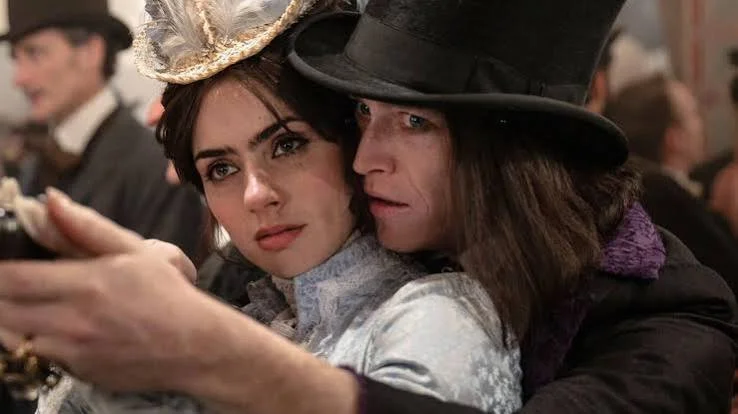
Dracula
-
Kali Uchis - “Cry About It!“
-
Marjo Molfino





At the end of December 2025, “Marty Supreme” surged past the competition, garnering enough press to be heralded as the major feature film of the year, but did it live up to expectations?
“Marty Supreme” is a brazen exploration of our nation’s favorite archetype: a man of special talents with all odds stacked against him. The film stars Timothée Chalamet as Marty Mauser, a character based loosely on the real-life professional table tennis player, showman, and hustler, Marty Reisman. Set against the electricity and hustle of 1950s New York, Mauser is introduced as a self-assured table tennis player begrudgingly working as a shoe salesman, whose confidence borders on delusions of grandeur, not just for himself, but for what the sport of table tennis can become at the national level. But when he is faced with the repercussions of his audacious behavior and antics, chaos ensues as the clock ticks and Marty attempts his shot at redemption.
After James Sweeney’s 2019 debut feature “Straight Up,” he has returned as writer, director, and lead actor in “Twinless,” a measured dark comedy and psychological drama that picks at the scabs of grief and absence.
The film’s premise centers around a chance encounter between Roman (Dylan O’ Brien) and Dennis (James Sweeney) at a support group for grieving twins who have lost their other half, their “built-in best friend,” and must now learn to navigate the world as “singletons.” This is where the unlikely relationship between the two characters flourishes and grows into desperate co-dependence, where both succeed in avoiding the deeper truths of their grief. There is a deep absence and regret that Sweeney masterfully crafts in both characters’ lives and use to extract visceral reactions from his audience when they least expect it.
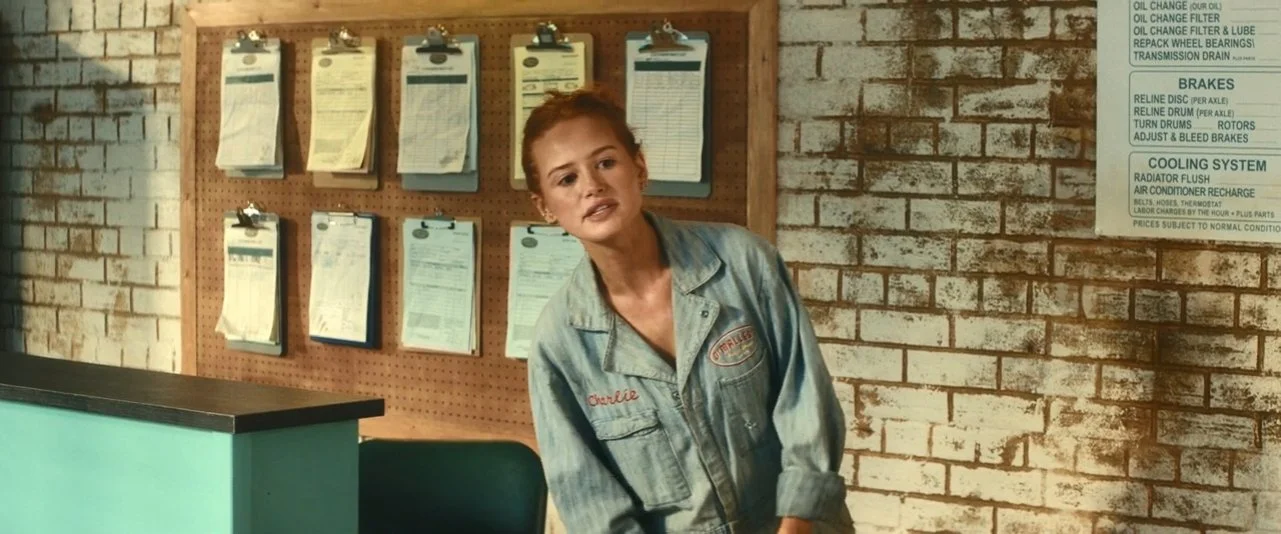
“Maintenance Required” marks the directorial debut of writer-director Lacey Uhlemeyer, centering on a female-led, family-owned auto repair shop. The film is largely inspired by a short documentary she previously created about an all-female auto shop, as well as classic romantic comedies.
Stylistically, the film leans unabashedly into romantic comedy tropes, calling to mind genre staples like You’ve Got Mail and The Shop Around the Corner. It features an enemy-to-lovers plotline, secret correspondence leading towards a highly anticipated first encounter, and an avoidance of romance in the two lead characters that needs resolving.
The cast is comprised of up-and-coming actors Madeleine Petsch (Charlie), Joe Scipio (Beau), Madison Bailey (Izzy), and Katy M. Brian (Kam). Despite its familiar faces, the film falters a bit when it comes to sustaining chemistry between the two leads.
Regretting You is a dramatic romance that achieves much more in the comedy department than in the romance one. It is overly aspirational in its adaptation of the 2019 novel by writer Colleen Hoover, attempting to cram in oversized tragic plotlines without enough dramatic chops to measure up to the task—whether from its cast or, more critically, its script. We are witnessing a run of Colleen Hoover novels adapted for the big screen, with some leaving a mark and others unfortunately missing it. Regretting You finds itself in a middle ground, able to garner the intended laughs and occasional sighs from its audience, but failing to take on emotional scenes that could drive the impact of tragedy beyond a mere plot device. We observe the characters, but do not feel the anxiety or anguish of their crossroads, nor see a semblance of range in their possibilities or choices. This may be partly due to the movie offering rushed resolutions to heavy plot points, glossing over family deaths, extramarital affairs, illness, and depression.
What if the ideal afterlife could be found through a choice as arbitrary as picking up the right pamphlet, hearing the right pitch at Exhibition A, or flipping through channels and landing onto a commercial that seems specifically (and almost eerily) made for you? This is the bureaucratic and precise world that director/writer David Freyne and writer Patrick Cunnane construct as the backdrop for one of the most vivid and high-stakes love triangles on-screen this season. At its center is Joan (Elizabeth Olsen), a former librarian who died of cancer, Larry (Miles Teller), her second husband, who passed a few months before her while eating a pretzel, and Luke (Callum Turner), her first husband, who died during the Korean War.
The movie establishes the characters of Larry and Luke well before Joan (Elizabeth Olsen) arrives in the afterlife; its comedic development of the situation feels natural and familiar despite the surreality of “eternity.”
Kali Uchis is rolling out the release of her upcoming album, “Sincerely: PS,” by teaming up with fellow R&B singer and songwriter Ravyn Lenae. Their single, “Cry about it!” fuses smooth R&B with strong 1950s doo-wop influences, creating a sound that feels both nostalgic and modern. Together, Uchis and Lenae deliver an incisive yet soothing bilingual melody that perfectly encapsulates a sort of “…must be cruel to be kind” approach when speaking to their current lover’s ex.
Both Uchis and Lenae, co-writers on the song, contribute a fresh take as the “new woman,” a rather untold side of an assumed but unsubstantiated love triangle. Instead of being reduced to the hated party (the girl who keeps the guy) – they craft a perfect response to their lover’s ex and her meddling. They refuse to engage with the undeserved projections and resentments towards them. Instead, they encourage the past lover to leave behind the imagined rivalry and move on – for their own sake.
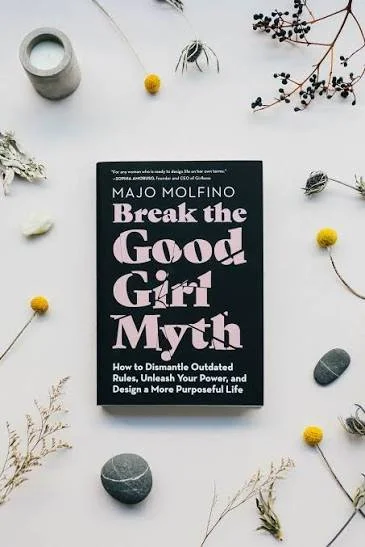
Book Review - Marjo Molfino’s, Break the Good Girl Myth:
It’s Not Kindness, If It Bites Into Who You Are
It is high school. I stay behind in class to hurriedly finish my notes, and the conversation between three peers draws me in. Slowly the conversation starts petering out, and so one of the girls takes her leave, having talked among them only minimally. When she leaves, another of the girls waits a second before saying, “I like her, she’s so nice.”
How many times have you heard this said about a woman? Maybe you’ve thought this was the ultimate compliment, a simple remark that expresses explicit acceptance and goodwill towards someone. As we become more involved in the progressive move towards understanding what makes patriarchy so pervasive, we should also start wondering about what lies behind such seemingly harmless compliments as this one.
Marjo Molfino’s novel, Break the Good Girl Myth, unpacks the well-kept and hidden consequences behind the need to be nice. For many women, it still stands as an insidious aspiration, valued and exalted throughout girlhood. As we enter a more prevalent era of feminism, we can begin to talk about dismantling one of the hardest testaments to misogyny – the idea that being likeable and agreeable will make your life easier. We are sold this lie as young girls and cornered into buying it. Molfino seeks to uncover how far along we’d get, if we started to reject the myths built around this social pronouncement, viewing it is a form of social control enforced to keep women down.
Molfino applies her specialized learning in design thinking to create a self-help book focused on women’s experiences, as it contends with the effects and nuances of women’s early socialization. Molfino, who is now a leadership coach for women, draws from anecdotes of her own life and those of her clients, to delve into the mechanisms and systems through which women are tricked into believing that being agreeable will combat deeper, underlying issues stemming from misogyny and rigid gender norms. These forces are often made invisible to us, and we may take for granted those differences which society tells us divide men and women, but Molfino does not sum these differences up to gender. Instead, she attributes these differences between men and women to our early socialization, looking closely at what behaviors and attitudes young girls and boys are encouraged to adopt, reject, abandon, or are simply made to accept.
Molfino relies heavily on her leadership advice, while trying to lean into profound analyses of her own childhood as well as those of her clients. In this way, she directs us towards an analysis of our own past, intent on tracing out a time and place in which we were safe and withdrawn from the torrent of abuse we endure as women. She leads us towards that place where we can dig out our most authentic selves, “where we’re going...some call it the essential, original, or native self.” As any good self-help book inevitably does, Molfino asks us to reach deeper into our self-knowledge, asking us to examine what cultural teachings and “rules” we’ve integrated into our personalities and manners. She creates a framework for us through which we may re-evaluate our reactions and approaches to our life’s aspirations and needs.
These myths that we filter our lives through work together to disarm us, offering us a false sense of security in exchange for our self-authority and confidence. Molfino guides us through all 5 myths by way of anecdotes and studies. She splits the book into sections, each focused on the myths of Rule, Perfection, Logic, Harmony, and potently, Sacrifice. Her framework incorporates journal exercises and activities, such as meditations, to help us unearth a common core, or issue, which molded us into the person we are today. This book attempts to reestablish confidence in women. Intent on restoring a confidence which is slowly eaten away by a ceaselessly hungry society that feeds on the lives and energy of women, no matter what they do.
Although we are being drawn into a self-motivating effort, we hardly notice it as we find ourselves recognizing aspects of our lives and childhoods within these women’s stories. Their struggles are made universal, as they seek to understand where they stem from. There are moments in which the reader can’t help but have tiny self-epiphanies, discovering that the socialization they experienced was designed to instill and grow fears, doubts, and inhibitions within.
Molfino relies heavily on design thinking and lived experience, but also incorporates her own studies to support her arguments and observations, as can be seen in the following quote that accompanied one of her client’s main concerns during a session, “In a study that videotaped parents giving their children praise, girls and boys received the same amount of praise, but parents of boys used a greater percentage of process praise, which focuses on effort and strategies, than did parents of girls, who praised them instead for personal traits such as intelligence.” Such research input does not form the basis of Molfino’s approaches towards building up women’s confidence, but they instead serve as tools through which we can reassess and reframe our own lives, allowing us to give ourselves grace and opportunity for change.
These opportunities can become realizations in our lives once we acknowledge them and find the necessary efforts to dissipate their harmful effects, in order to bolster self-confidence and fulfillment.